Civil Emergency Messages
Have you ever seen a Civil Emergency Message and wondered what it was? I don't blame you if you don't know what they are. The information that's available to the public is poor at best and pretty confusing.
What is a Civil Emergency Message? A Civil Emergency Message (CEM) is a warning issued by a local, state or national government agency that is then broadcast by the NOAA Weather Radio (NWR) system and Emergency Alert System (EAS). This emergency can be weather-related but it can also be part of an all-hazards notification.
Let's look closer at what a civil emergency and a Civil Emergency Message are.
[wc_toggle title="Table of Contents" padding="" border_width="" class="" layout="box"]
What Makes Something a Civil Emergency
What makes something a civil emergency will differ a little depending on the specific area that you live in because they are usually declared by a local or state emergency management office. Usually, they are going to be a disaster or emergency that affects the local area and is either imminent or in progress.
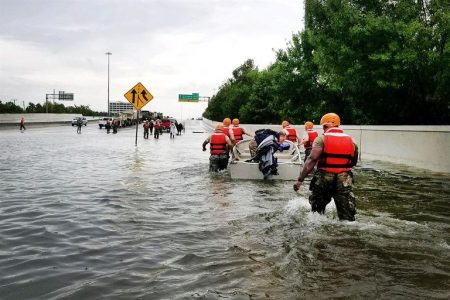
A terrorist threat, landslides, weakened dams, loss of water, flooding, or even an accident that's releasing chemicals into the air are all examples of events that could be labeled a civil emergency.
What is a Civil Emergency Message
Civil Emergency Messages warn the general public of imminent threats to public safety or threats that are in progress as the message is broadcast. A Civil Emergency Message has a higher priority than a Local Area Emergency (a warning of a potential threat) but is not as specific or widespread as a Civil Danger Warning (an ongoing threat to a large population).
This is an example of what a CEM will look like if one is broadcast in your area:
Why Does NWR Broadcast Emergency Messages?
The NOAA Weather Radio service was chosen to be the primary means of sending all-hazards alerts to the public. A study was done back in the 1970s and it found that the National Weather Service had much better coverage in place than other systems which made it easier and more effective for them to take on the responsibility of being the main office to send out emergency alerts.
Modern technology has made it easier to reach people through the National Emergency Alert System (EAS) but NWR still broadcasts alerts over VHF radio in case other technology fails or you're in an area that's outside of normal cell coverage. They have the ability to broadcast to only certain areas or across the entire network all at once.
[wc_box color="primary" text_align="left" margin_top="" margin_bottom="" class=""]
NOAA Weather Radio forms the backbone of all-hazards alert notification. That's why every emergency kit needs to have a NOAA capable radio in it!
[/wc_box]
NWR includes more than 1000 transmitters, covering all 50 states, adjacent coastal waters, Puerto Rico, the U.S. Virgin Islands, and the U.S. Pacific Territories. They broadcast up to date info 24 hours a day 7 days a week!
The National Weather Service is an amazing resource to find out what's going on in your local area. They don't only put out weather advisories.
If you're ever wondering what's going on in an area, just go to their website, plug in the zip code in the top left of the page and hit search. You'll get a ton of weather info but you'll also get access to any other dangerous conditions that have been observed in the area. It's a tool that a lot of people do know about!
How Does a Civil Emergency Message Get Sent Out
When a CEM is issued it usually comes from the local or state level emergency managers' office. They send the message to the National Weather Service who then broadcasts the message over the NOAA Weather Radio (NWR).
The CEM will also be broadcast over the EAS so you should get notified on your phone and the television.
What Should You Do When You See a Civil Emergency Message
When you see or hear a CEM, you should do whatever is suggested by the message. If it recommends avoiding an area, then stay out of that area if you can, if it says to shelter in place, then shelter in place. It's really pretty simple.
What to do if you see a Civil Emergency Message:
- Follow the directions given in the CEM.
- Do not try to go see the area that's affected by the CEM.
- If you're in the danger area, let loved ones know that you're okay so they don't try to find you.
Conclusion
Civil Emergency Messages are meant to warn you about an emergency that is going to happen, or is happening and gives you a suggested course of action to take. You should do what you can to stay away from the area or take the recommended action.
Never go toward an area that's experiencing an emergency just to check it out and see what's going on! You not only run the risk of getting injured, but you can also cause emergency responders to have to risk their safety to rescue you.
What is a Civil Emergency Message – What You Need to Do When You Get One was originally published on: www.readylifestyle-staging.gtgrgq9c-liquidwebsites.com
Comments
Post a Comment